Shooting at Brown University

Shooting at Brown University and the Killing of an MIT Professor: Reconstruction of Events and Key Questions
A series of tragic events that began with a shooting at Brown University and ended with the killing of a professor at the Massachusetts Institute of Technology (MIT) has become one of the most serious incidents affecting the U.S. academic community in recent years. American law enforcement agencies believe that both crimes were committed by the same individual, who was later found dead in the state of New Hampshire after a multi-day manhunt.
This article offers a structured reconstruction of what is currently known, while also outlining the key questions that investigators have yet to answer publicly.
Timeline: From Brown University to New Hampshire
According to investigators, on Saturday, December 14, 2025, an armed man opened fire inside a lecture hall of an engineering building at Brown University in Providence, Rhode Island.
As a result of the attack:
- two students were killed,
- nine people were injured, some seriously.
The shooter fled the scene, triggering a large-scale manhunt that extended across several U.S. states.
Two days later, on December 16, in Brookline, Massachusetts — a suburb of Boston — MIT professor Nuno F. G. Loureiro was shot and killed at his home. Initially treated as a separate incident, authorities later confirmed that the two cases were linked.

Identity of the Suspect
Law enforcement officials identified the suspect as Cláudio Neves Valente, a 48-year-old Portuguese national.
Confirmed biographical details include:
- Valente was enrolled as a graduate student in physics at Brown University from fall 2000 to spring 2001;
- Brown University officials emphasized that he has had no affiliation with the university for more than 20 years;
- Valente later obtained U.S. permanent resident status, though his activities and whereabouts between 2001 and the granting of a green card remain under review.
Investigators believe Valente acted alone.

Connection to the MIT Professor
The killing of the MIT professor became a central focus of the investigation.
Nuno F. G. Loureiro:
- joined MIT in 2016;
- was appointed in 2024 as director of the Plasma Science and Fusion Center, one of the institute’s largest research facilities;
- specialized in plasma physics and astrophysical phenomena, including solar flares.
The Massachusetts Attorney General’s Office stated that Valente and Loureiro shared a common academic background in Portugal. Both were associated with the physics program at Instituto Superior Técnico in Lisbon, one of the country’s leading engineering schools.
Archival records indicate that:
- Loureiro graduated from the program in 2000;
- in the same year, Valente was dismissed or removed from the institution.
Authorities stress that no definitive motive for the killing of the MIT professor has yet been established, and investigators continue to examine possible personal or professional connections.
How the Manhunt Unfolded
The search for the suspect became one of the most technologically intensive operations of its kind in recent years.
Key elements included:
- a crucial tip from a private individual who had previously encountered Valente and later recognized him in images released by police;
- the individual initially posted suspicions on Reddit before being formally interviewed by investigators;
- police identified a Nissan sedan bearing Florida license plates;
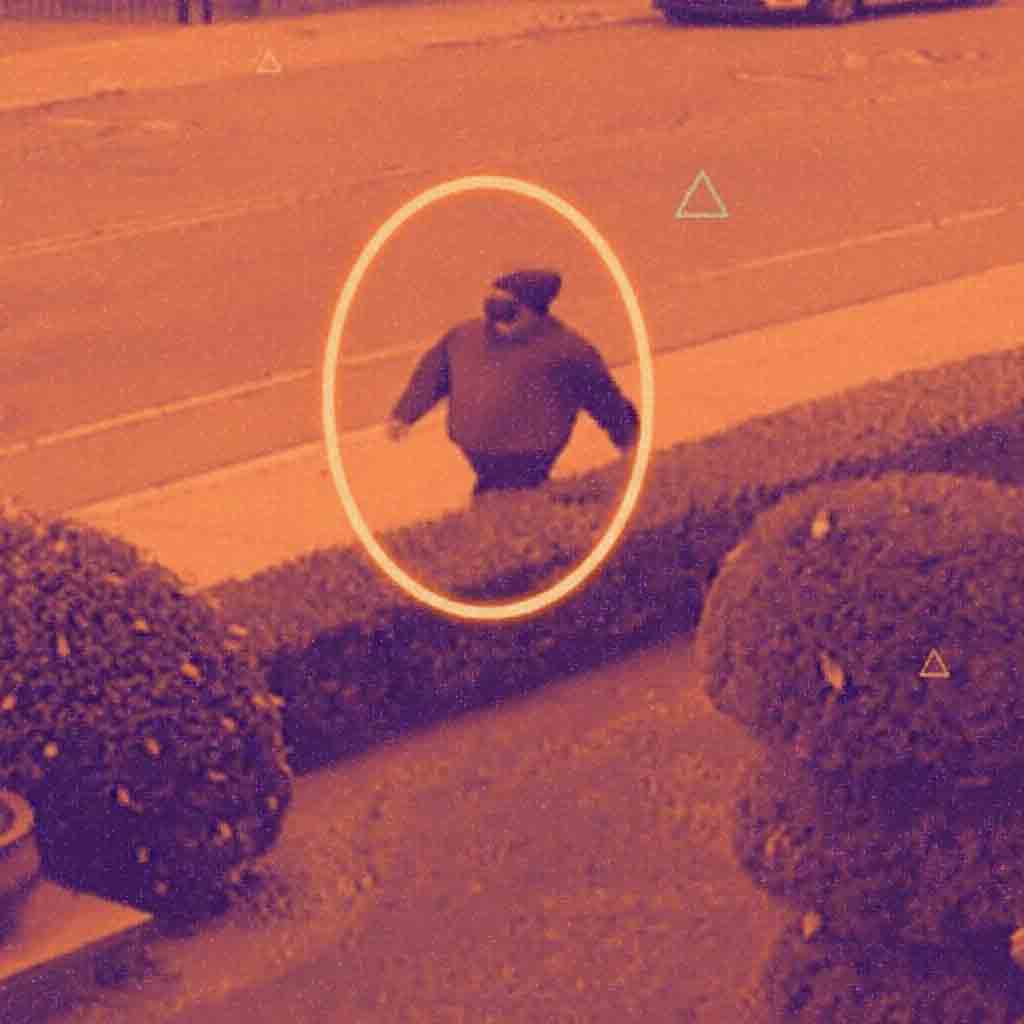
- investigators relied on a network of more than 70 street cameras operated by a private surveillance company to track the vehicle’s movements;
- authorities believe Valente temporarily covered the original license plate with a Maine plate to avoid detection.
Final Movements and Death of the Suspect
Surveillance footage showed Valente entering a residential building near Professor Loureiro’s home. Approximately one hour later, he was recorded entering a storage facility in Salem, New Hampshire.
He was later found dead at that location. According to law enforcement:
- the cause of death was suicide;
- he was carrying a bag and two firearms.
At that point, the active phase of the manhunt was officially concluded.
Campus Security at Brown University
The shooting raised renewed concerns about campus security in U.S. universities.
Administrators at Brown University stated that the campus is equipped with approximately 1,200 surveillance cameras. However, the attack occurred:
- in an older section of an engineering building;
- in an area with limited camera coverage.
Investigators believe the shooter entered and exited through a door facing a nearby residential street, which may explain why the incident was not captured by university cameras.
Political and Immigration Fallout
Following the public identification of the suspect, U.S. President Donald Trump announced the suspension of the green card lottery program. The administration described the move as part of a broader review of immigration security mechanisms.
Authorities confirmed that Valente:
- initially entered the United States on a student visa;
- obtained permanent resident status in September 2017;
- has an immigration history prior to that date that remains under investigation.
Outstanding Questions
Despite the conclusion of the manhunt, several critical questions remain unanswered:
- Why was Brown University, and a specific classroom, chosen as the target of the initial attack?
- Was the killing of the MIT professor premeditated, or did it occur as a continuation of the earlier violence?
- What role, if any, did academic events from more than two decades ago play in the suspect’s actions?
- Were there security gaps at Brown University that made the attack possible?
Investigators have indicated that answering these questions will require further forensic, psychological, and procedural analysis.
Conclusion
At this stage, U.S. authorities consider it established that:
- both crimes were committed by the same individual;
- the suspect acted alone;
- the motive behind his actions remains unknown.
The tragedy at Brown University and the killing of an MIT professor have become not only a criminal case, but also a serious challenge for the American academic community, renewing debate over campus security, institutional responsibility, and early threat detection.