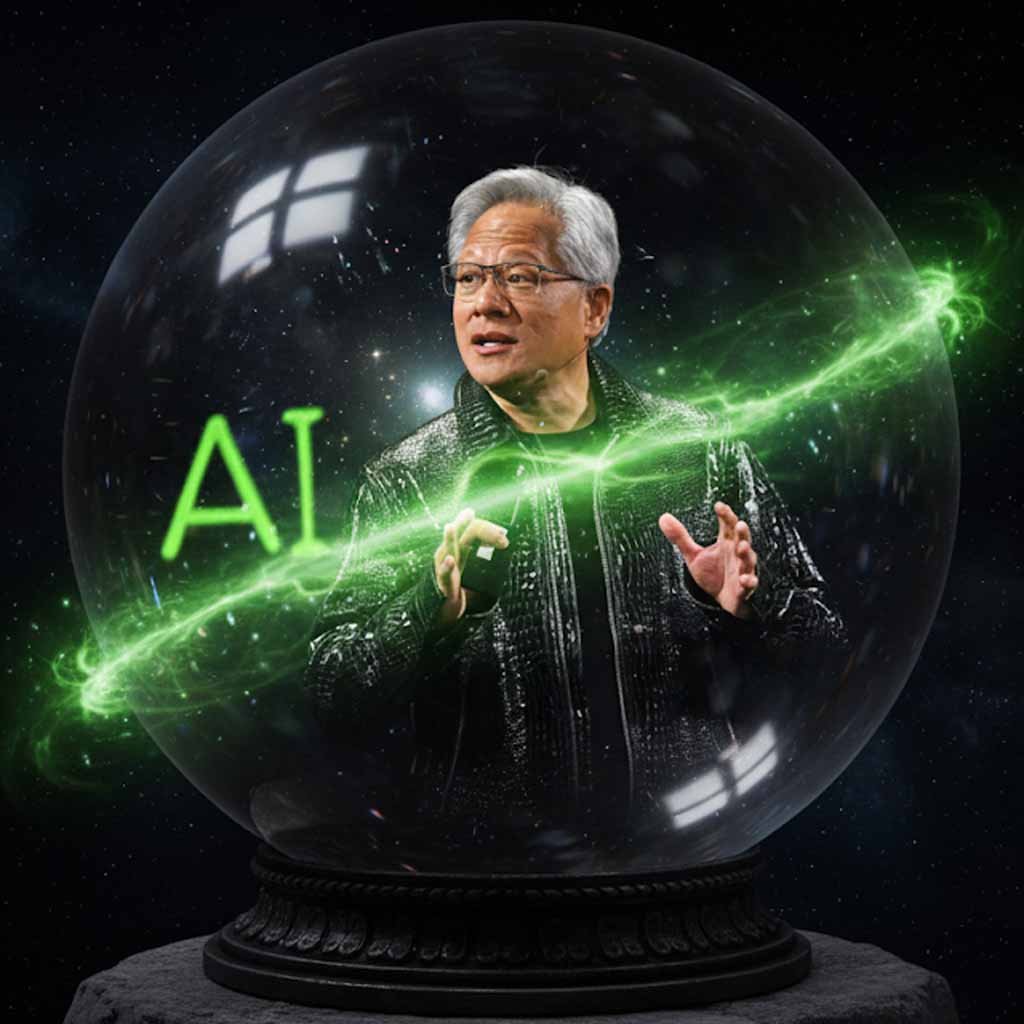
Nvidia chief executive Jensen Huang unveils new artificial intelligence model

Nvidia chief executive Jensen Huang unveils new artificial intelligence model for autonomous cars
Nvidia chief executive Jensen Huang unveiled a new artificial intelligence model for autonomous cars during a presentation at the CES technology exhibition in Las Vegas. In his remarks, he sought to reassure investors about the durability and scale of the current artificial intelligence boom.
Huang introduced a model called Alpamayo, which he described as the first autonomous car system in the world capable of thinking and reasoning. According to him, the artificial intelligence behind Alpamayo can teach a car how to drive. He stressed that the development of the model required the work of thousands of people.
Speaking to delegates at CES, Huang said the system does more than process sensor data and control steering, braking and acceleration. He explained that the model also evaluates the situation and reasons about which action it is about to take next.
Huang told the audience that the economics of the current artificial intelligence boom reflect a fundamental transformation of the computer industry. He said that around 10 trillion dollars of computing investment made over the past decade is now being modernised for a new way of computing. This shift, he argued, is driving hundreds of billions of dollars in venture capital investment each year. At the same time, parts of the research and development budgets of industries worth roughly 100 trillion dollars are moving toward artificial intelligence. He said this explains where the vast sums of money flowing into the sector are coming from.
With a market capitalisation of about 4.6 trillion dollars, Nvidia remains the largest publicly listed company in the world. The company reported revenue of nearly 148 billion dollars in the 9 months to October, compared with 27.5 billion dollars over the same period in 2023. Analysts believe that revenue could exceed 300 billion dollars in the next calendar year.
Nvidia is using its large cash reserves to invest aggressively across the artificial intelligence ecosystem. The company has committed up to 100 billion dollars to OpenAI, acquired a stake of about 5 billion dollars in Intel and agreed to purchase unsold cloud computing capacity from the data centre operator CoreWeave until 2032. This arrangement effectively guarantees demand for one of its key customers.
These strategies have prompted debate in financial markets about the circular nature of some of the deals. Such concerns have added to fears that the high valuations of several United States technology companies may signal the emergence of a bubble.
At the same time, Nvidia faces growing competition from Google, which relies on its own specialised processing units to develop the Gemini model. According to Reuters, Meta is considering becoming a customer of that platform. In response to these reports, Nvidia previously said that it continues to supply Google and remains a generation ahead of the industry, describing itself as the only platform capable of running every artificial intelligence model across all computing environments.
Huang also announced that the next generation of the company artificial intelligence platform, known as Vera Rubin and named after a pioneering United States astronomer, is already in full scale production. In addition, he approved a licensing agreement worth 20 billion dollars with the startup Groq. The deal has been described within the industry as an acqui hire arrangement because it involves Groq executives moving to Nvidia.
Huang emphasised that the amount of computation required for artificial intelligence is rising rapidly. He said demand for Nvidia graphics processing units is increasing as models grow larger, noting that their size is expanding by a factor of 10 every year.
Intel is expected to unveil a new artificial intelligence chip for laptops at CES, while AMD chief executive Lisa Su is also expected to announce new developments during her keynote address at the event, which traditionally brings together many of the world largest buyers of semiconductor products for consumer electronics.