Escalation in Venezuela: U.S. Tensions

Relations between Venezuela and the United States have moved into a phase of direct maritime pressure, as Washington tightens enforcement against oil flows that it says sustain President Nicolás Maduro’s government, and Caracas denounces the campaign as piracy and a violation of international law.
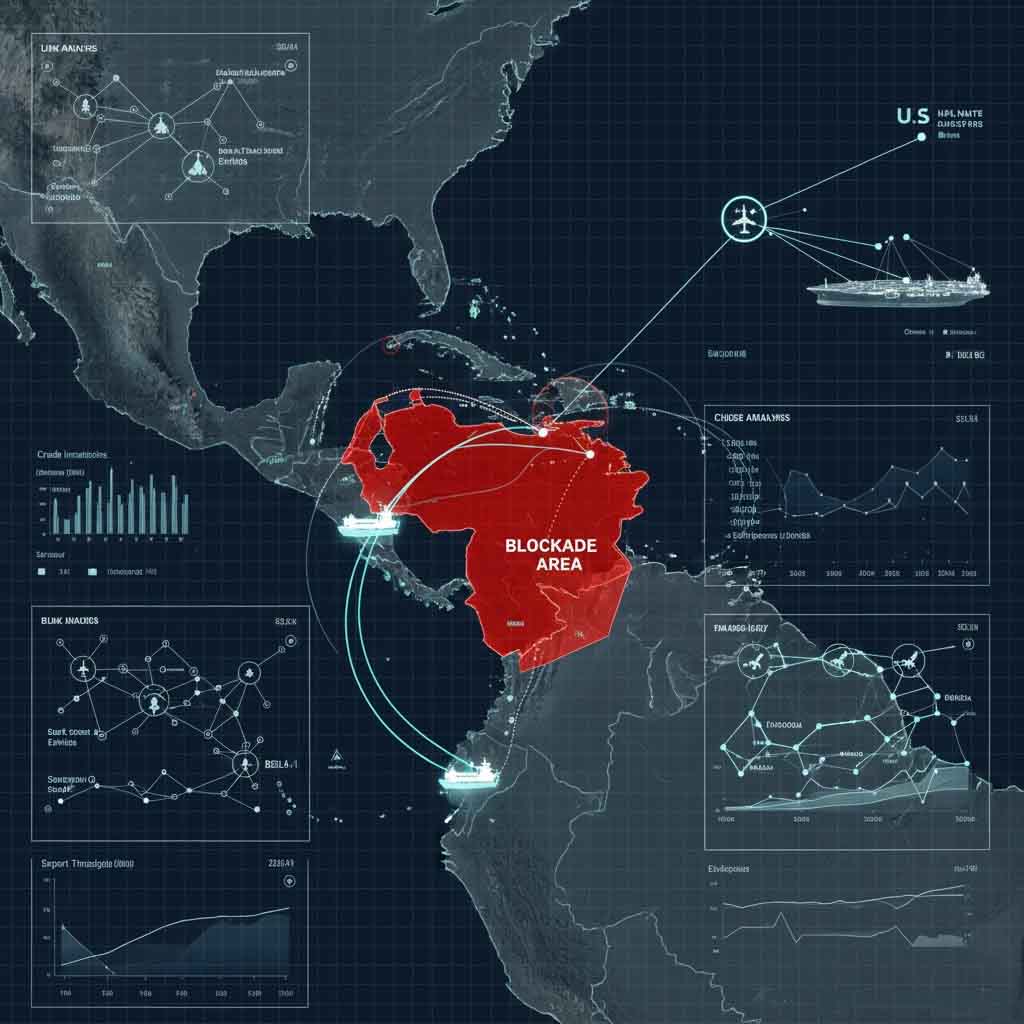
The latest turning point came after U.S. President Donald Trump publicly ordered what he called a “total and complete blockade” of sanctioned oil tankers traveling into and out of Venezuela. Caracas rejected the announcement as a “grotesque threat,” while U.S. officials framed the step as part of a broader effort to choke off sanctions evasion and alleged narcotics-linked revenue streams tied to the Venezuelan state.
Seizures at sea and the “Skipper” case
The confrontation became tangible on Dec. 10, when U.S. forces seized the sanctioned very large crude carrier Skipper off Venezuela’s coast. Trump said the United States would keep the oil. Tracking and shipping reporting indicated the ship carried roughly 1.85 million barrels of Venezuela’s Merey heavy crude and was taken toward the Houston area, where such vessels typically transfer cargo offshore because they cannot transit the Houston Ship Channel.
Reuters graphics and vessel-tracking analysis also described ship-to-ship movements in early December, with the Skipper linked to a transfer near Curaçao before the seizure—details that underline Washington’s focus on “dark fleet” logistics used to move sanctioned crude.
A widening pursuit and limits of enforcement
The pressure campaign expanded beyond a single seizure. U.S. officials told Reuters that the Coast Guard has been pursuing a third tanker in international waters near Venezuela, described as a sanctioned “dark fleet” vessel operating under a judicial seizure order. Maritime risk and security sources identified the ship as Bella 1, and reported it had refused standard boarding attempts.
A Reuters report dated Dec. 24 added an operational constraint: the Coast Guard was waiting for additional specialized forces before attempting a high-risk boarding, highlighting a mismatch between the administration’s objectives and the Coast Guard’s limited elite boarding capacity for this type of operation. The same reporting described a major U.S. military posture in the Caribbean—aircraft carrier and aviation assets among it—while noting that law-enforcement seizures at sea fall primarily to the Coast Guard.
Pressure on PDVSA: backlog, storage strain, and floating inventories
Inside Venezuela’s oil system, the maritime squeeze has translated into bottlenecks. Reuters reported that PDVSA began using tankers as floating storage as onshore tanks filled and more than a dozen cargoes remained stuck in Venezuelan waters waiting to depart. The congestion has been especially acute around the José terminal, a key outlet for crude coming from the Orinoco Belt.
In the same reporting, Chevron was described as continuing exports under its joint-venture framework, accounting for only a share of the Orinoco-related stream, while broader flows—particularly those bound for Asia—faced growing uncertainty. Separate Reuters reporting also noted that tanker loading dwindled after new interceptions, amid PDVSA’s efforts to recover from a cyberattack that disrupted administrative systems.
Caracas responds: law, UN diplomacy, and political polarization
Caracas has tried to answer on three tracks: legal, diplomatic, and security.
Venezuela’s National Assembly approved legislation providing up to 20 years in prison for those who promote or finance what it defines as piracy, blockades, and related international crimes. Venezuelan officials presented the measure as a defense of freedom of navigation and commerce; U.S. authorities say the operations are aimed at sanctions evasion and drug trafficking networks.
The dispute has also moved to international venues. AP reported that Venezuela convened an emergency discussion at the UN Security Council and accused the United States of acting outside international law. The same report described the Venezuelan opposition—among them María Corina Machado—as supporting U.S. pressure, deepening the internal political split as the external confrontation intensifies.
What comes next
The operational picture now hinges on enforcement choices at sea: whether Washington expands interdictions beyond clearly sanctioned vessels, how consistently it can sustain high-risk boardings, and whether insurers, shipowners, and intermediaries further retreat from Venezuelan trade.
For Caracas, the immediate vulnerability is commercial. Even temporary export paralysis strains storage capacity, discounts, and contract stability—raising the risk of output curtailments if inventories keep climbing. For the wider region, the standoff adds a new layer of military and legal friction in the Caribbean corridor, where energy flows, sanctions policy, and security operations are now entangled in a single crisis dynamic.
Sources
- Reuters — “Trump orders ‘blockade’ of sanctioned oil tankers leaving, entering Venezuela” (Dec. 16, 2025). (Reuters)
- Reuters — “US seizes sanctioned oil tanker off coast of Venezuela, Trump says” (Dec. 10, 2025). (Reuters)
- Reuters — “Supertanker Skipper seized by US near Venezuela is heading to Houston, sources say” (Dec. 12, 2025). (Reuters)
- Reuters Graphics — “US military seizes Venezuelan oil tanker” (Dec. 12, 2025). (Reuters)
- Reuters — “US pursuing third oil tanker near Venezuela, officials say” (updated Dec. 22, 2025). (Reuters)
- Reuters — “Venezuela resorts to floating storage as onshore storage tanks fill up” (Dec. 23, 2025). (Reuters)
- Reuters — “Venezuela passes law against piracy, blockades amid US oil ship seizures” (Dec. 23, 2025). (Reuters)
- Reuters — “Exclusive: US Coast Guard lacks forces to seize Venezuela-linked tanker for now, sources say” (Dec. 24, 2025). (Reuters)
- AP — “Venezuela seeks to criminalize oil tanker seizures as Trump puts pressure on Maduro” (Dec. 24, 2025). (AP News)